Optometrist Template
LV Assessment Record
A professional Optometrist template for healthcare professionals.
About this template
Enhance your optometry practice with the comprehensive LV Assessment Record template. Designed for eye care professionals, this clinical notes template streamlines the documentation of low vision assessments, covering everything from ocular and general medical history to detailed visual findings and rehabilitation goals. Optometrists, ophthalmologists, and low vision therapists will find this invaluable for recording patient activities of daily living, visual demands, and the outcomes of low vision aid trials. Heidi, your AI medical scribe, intelligently populates this template from your consultations, ensuring thorough and accurate documentation of essential information such as magnification requirements, contrast sensitivity, and follow-up arrangements, helping you provide exceptional patient care.
Preview template
Optometrist
Summary of Ocular History:
Patient presents with a history of age-related macular degeneration (ARMD) in both eyes, diagnosed approximately five years ago. Vision has progressively deteriorated, with more significant loss in the right eye. Patient underwent bilateral anti-VEGF injections two years prior, with limited improvement. Current symptoms include central scotoma and difficulty with fine detail. No history of ocular surgery besides injections.
Summary of General Medical History:
Patient has well-controlled hypertension managed with Ramipril 5mg daily and mild osteoarthritis for which Ibuprofen is taken as needed. No known drug allergies. No other significant systemic conditions reported.
Other Relevant Background/Activities of Daily Living:
Sensory support service involvement status: Patient is currently awaiting an initial assessment with the local sensory support team for low vision rehabilitation.
Reading correspondence: Patient struggles significantly with reading standard print correspondence, requiring large print or assistance from family members. Support arrangements are in progress with the sensory support team.
Reading for leisure: Patient is unable to read standard print books or magazines. Enjoys audiobooks and podcasts.
Reading food packets: Patient finds it very difficult to read ingredients and cooking instructions on food packets, often relying on tactile recognition or family assistance.
Medications: Patient reports some difficulty distinguishing between medication bottles but manages well with the aid of a large-print label magnifier provided by the pharmacy and a structured pill organiser.
Writing: Patient can sign their name but struggles with writing legible notes or completing forms due to visual impairment.
Shopping: Patient is independent for shopping with the aid of a family member for navigation and reading labels. Reports difficulty identifying specific items on shelves.
Use of kitchen appliances: Patient uses kitchen appliances with caution, preferring those with large, tactile controls. Expresses safety concerns regarding the hob and oven, often requiring supervision when cooking. Support arrangements for kitchen safety modifications are being explored.
Use of technology: Patient uses a smartphone with accessibility features (large text, voice control) for communication. Expresses interest in learning to use a tablet for larger display reading.
Seeing to tell the time: Patient uses a talking watch. Reports inability to read analogue or standard digital clocks.
Using a telephone: Patient uses a standard corded telephone with large buttons. Reports no difficulty with hearing or speaking, but struggles to dial without visual assistance.
Television: Patient sits very close to the television and relies on audio for understanding content. Experiences significant difficulty with subtitles or on-screen text.
Driving: Patient ceased driving five years ago due to declining vision.
Mobility: Patient is generally mobile indoors but uses a white cane for outdoor navigation, particularly in unfamiliar environments. Reports occasional stumbles due to uneven surfaces but no recent falls. Expresses safety concerns regarding steps and curbs.
Employment: Patient is retired. Previously worked as an accountant, a role with high visual demands.
Hobbies/Interests: Enjoys listening to classical music, gardening (with assistance for identifying plants), and walking with family. Adaptation needs include larger print for plant labels and improved lighting for indoor activities.
Glare: Patient reports significant sensitivity to glare, particularly from bright lights and reflective surfaces. Uses sunglasses outdoors and tinted lenses indoors.
Light and dark adaptation: Patient experiences prolonged adaptation time when moving between different lighting conditions, especially from bright to dim environments.
Depression screening: Patient reports occasional feelings of frustration and sadness related to vision loss but denies symptoms meeting criteria for clinical depression. Expresses a strong desire to maintain independence.
Living situation: Patient lives alone in a single-story detached house. Receives regular visits from their daughter and has a good support network.
Low vision goals to address:
* Improve ability to read medication labels and food packaging.
* Enhance safety and independence in the kitchen.
* Explore options for reading leisure material.
* Improve outdoor mobility confidence.
Summary of Relevant Clinical Findings:
Patient exhibits significant bilateral central scotoma consistent with ARMD. Best corrected visual acuity is 6/60 OD and 6/36 OS. Patient understands the chronic nature of their condition and expresses a proactive attitude towards rehabilitation.
Summary of Low Vision Examination:
Current spectacle prescription: R: +2.00 / -0.50 x 90, L: +2.50 / -0.75 x 180. Patient uses these spectacles consistently.
Retinoscopy and subjective:
RE: Plano / -1.00 x 95 (VA 6/60) with difficulty reading 6/38 line. LE: Plano / -0.75 x 175 (VA 6/36) with difficulty reading 6/24 line.
Near vision assessment: Near add power +4.00 D. Reading ability with current spectacles and +4.00D add is N18 at 10cm. Requires high magnification for N8 equivalent.
Contrast sensitivity: Reduced contrast sensitivity (Pelli-Robson chart: 0.95 log CS OD, 1.20 log CS OS), impacting daily tasks in varied lighting.
Visual fields: Humphrey 24-2 SITA Standard revealed dense central scotoma in both eyes, more pronounced in the right eye. Peripheral fields appear relatively intact.
Lighting assessment: Patient reported significant benefit from increased ambient lighting and task lighting during the assessment, particularly with an LED daylight lamp.
Magnification requirements: Requires approximately 10x magnification for N8 print (e.g., medication labels) and 4x magnification for N12-N14 print (e.g., large print correspondence).
Low vision aid trials:
* Handheld magnifier (10x): Patient found it helpful for spot reading, but difficult to maintain focus.
* Stand magnifier (7x, illuminated): Preferred for reading short paragraphs, better stability.
* Electronic video magnifier (EVM): Demonstrated significant improvement in reading speed and comfort for sustained reading tasks. Patient found controls intuitive.
Additional equipment issued: A large-print calendar and a high-contrast cutting board were recommended and provided as an immediate aid.
Sensory support involvement: Referral to the local low vision rehabilitation service for comprehensive training with EVMs and ADL adaptations has been actioned.
Action/Advice:
* Trial of an electronic video magnifier (EVM) for reading tasks.
* Recommendation for improved task lighting at home, specifically an LED daylight lamp.
* Discussed strategies for identifying medication bottles (e.g., tactile markers, pharmacy support).
* Provided information on accessible cooking appliances and kitchen safety adaptations.
* Encouraged continued use of a white cane for outdoor mobility.
* Referral to occupational therapy for home assessment and ADL support.
Follow-up arrangements: Review appointment scheduled for 1 November 2024, to assess the effectiveness of low vision aids and progress with rehabilitation services. Patient advised to contact clinic sooner if any concerns arise.
Reflections:
Patient presents as highly motivated despite significant vision loss due to ARMD. The comprehensive low vision assessment revealed clear functional goals. The trial of the EVM was particularly successful, indicating a strong potential for improved independence in reading tasks. Early intervention with sensory support and occupational therapy will be crucial for optimising long-term quality of life and managing daily living activities safely. Consideration for further psychological support may be warranted if depression symptoms worsen.
How to use this template
Step 1
Download the template
Get started by downloading the template to your device

Step 2
Customize to your needs
Tailor the template to match your specific requirements
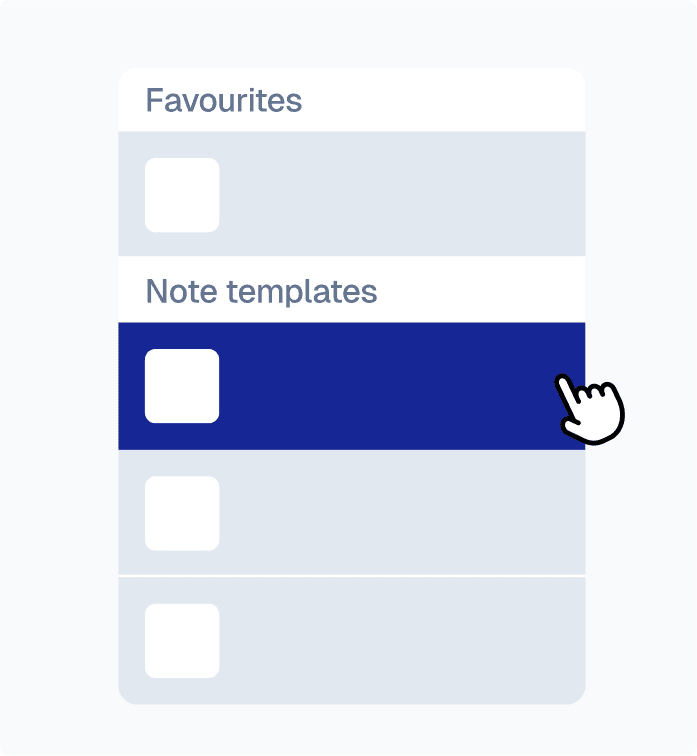
Step 3
Deploy and share
Implement your customized template and share with your team
Start practicing with a partner
Care is better with Heidi
Specialty
Optometrist
Used
1 times
Type
Note
Last edited
03/06/2026
Created by
Sarah Jane