Orthopaedic Surgeon Template
Initial Shoulder Consultation
A professional Orthopaedic Surgeon template for healthcare professionals.
About this template
Effortlessly create detailed and patient-friendly initial shoulder consultation letters with our "Initial Shoulder Consultation" template. Specifically designed for orthopaedic surgeons, this template streamlines the documentation process, ensuring all critical aspects of a patient's shoulder condition are captured comprehensively. It allows for clear outlining of the diagnosis, Oxford Shoulder Score, a thorough history including symptoms and relevant medical background, co-morbidities, detailed clinical examination findings, and investigations. Most importantly, it generates a clear and concise treatment plan, written directly to the patient in an easy-to-understand format. Heidi, our AI medical scribe, can populate this template directly from your consultation transcript, saving you valuable time and ensuring consistent, high-quality patient communication.
Preview template
Date of Consultation: 01/11/2024
Patient Name: John Smith
Patient Date of Birth: 15/03/1975
Diagnosis:
Based on our discussion today, you have been diagnosed with rotator cuff tendinopathy in your right shoulder. This condition typically involves inflammation and irritation of the tendons in your shoulder, leading to pain and weakness, especially with overhead movements.
Oxford Shoulder Score:
32/48 (performed on 28/10/2024)
History:
You are 49 years old and right-hand dominant. You work as a carpenter, which involves frequent overhead reaching and heavy lifting. You enjoy playing golf and swimming in your spare time. You have been experiencing significant pain in your right shoulder for approximately six months. You report that the pain is often present at night, making it difficult to find a comfortable sleeping position, and you often wake up due to the pain. You also experience some pain at rest. You find it impossible to lie on your affected right shoulder due to the discomfort. Your sleep is severely disturbed, and you rate your pain as 7 out of 10 at its worst. You are having significant difficulty with overhead activities, such as reaching for tools on a high shelf or performing swimming strokes.
You have not experienced any associated neck pain. However, you have noticed occasional pins and needles in your right hand, particularly in your thumb and index finger, but no altered sensation.
Regarding your past medical history, you have a long-standing history of mild hypertension, which is currently well-controlled with medication. You also had a minor knee arthroscopy five years ago, which is unrelated to your current shoulder issue.
Co-morbidities:
Hypertension, controlled
No known allergies
Non-smoker
Clinical Examination:
During your examination today, we observed some mild asymmetry in your right shoulder, with subtle atrophy of the supraspinatus muscle. Palpation revealed tenderness over the greater tuberosity and along the biceps tendon. Your active range of motion was restricted, particularly with abduction and external rotation, due to pain. Passive range of motion was slightly better but still painful at end ranges. Special tests performed included a positive Neer's impingement sign and a positive Hawkins-Kennedy test, both reproducing your shoulder pain. The empty can test elicited weakness and pain, particularly in your supraspinatus. Your neurological examination of the upper limb was otherwise unremarkable.
Investigations:
An MRI scan of your right shoulder performed on 25/10/2024 showed evidence of significant supraspinatus tendinopathy with partial-thickness tearing and subacromial bursitis. X-rays taken on the same date showed no significant degenerative changes or fractures.
Plan:
Our plan is to initially manage your rotator cuff tendinopathy conservatively. You will be referred for a course of physical therapy to focus on strengthening your rotator cuff muscles, improving scapular stability, and restoring your range of motion. We will also prescribe a short course of anti-inflammatory medication to help manage your pain and inflammation. We will review your progress in six weeks, and if your symptoms have not significantly improved, we will then discuss the option of a corticosteroid injection or consider surgical intervention. In the meantime, please try to avoid activities that aggravate your shoulder pain, especially overhead movements, and continue with your prescribed exercises diligently. You are expected to attend all physical therapy sessions and take your medication as directed.
How to use this template

Step 1
Download the template
Get started by downloading the template to your device

Step 2
Customize to your needs
Tailor the template to match your specific requirements
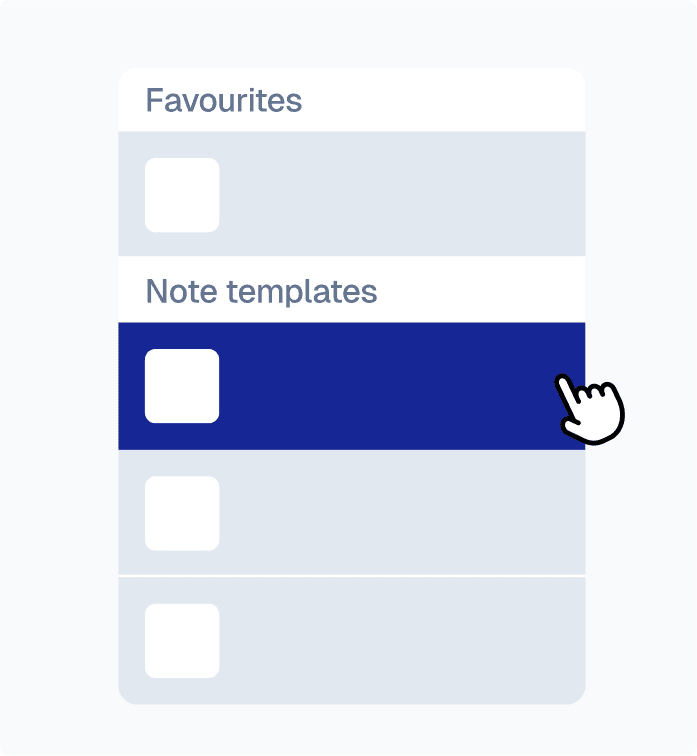
Step 3
Deploy and share
Implement your customized template and share with your team
Start practicing with a partner
Care is better with Heidi
Specialty
Orthopaedic Surgeon
Used
6 times
Type
Note
Last edited
2026/5/15
Created by
Amitabh Dwyer